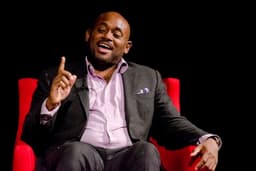
Brian Armstrong Personality Type: INTJ
Co-founder and Chief Executive Officer, Coinbase · The Strategic Architect
Brian Armstrong, co-founder and CEO of Coinbase, profiles as an INTJ with agreeableness of 28/100, among the lowest in this index. The clearest documented instance is a management decision with a measurable cost: his September 2020 memo defining Coinbase as a "mission focused company" discouraged workplace activism, and roughly 60 employees, about 5% of staff, accepted severance and left rather than accept it.
Who is Brian Armstrong?
Brian Armstrong is the American entrepreneur who co-founded the cryptocurrency exchange Coinbase with Fred Ehrsam in 2012, and took it public through a direct listing in April 2021.
He appeared on the David Senra podcast on March 1, 2026.
What makes Brian Armstrong’s profile unusual?
Armstrong is the index’s clearest case of a founder willing to pay an immediate, quantified price to hold a position. Most low-agreeableness founders here generate conflict as a by-product of pursuing something else. Armstrong made a deliberate organisational choice, published it, and absorbed the departure of about 5% of his workforce within weeks. Whether the call was right is a separate question from what it measures: this is unusually legible evidence of conviction priced in headcount.
Brian Armstrong’s Big Five scores
| Openness | 82 | |
|---|---|---|
| Conscientiousness | 85 | |
| Extraversion | 55 | |
| Agreeableness | 28 | |
| Emotional Stability | 88 |
MBTI type INTJ is derived from these Big Five scores, not assigned separately. See the methodology.
Brian Armstrong’s entrepreneurial traits
| Risk Tolerance | 90 | +8 vs median | |
|---|---|---|---|
| Visionary Thinking | 90 | +2 vs median | |
| Execution Focus | 88 | 0 vs median | |
| People Orientation | 45 | -20 vs median | |
| Technical Depth | 85 | +14 vs median | |
| Sales Ability | 75 | -10 vs median | |
| Resilience | 92 | +4 vs median | |
| Creativity | 78 | -6 vs median | |
| Analytical Rigor | 88 | 0 vs median | |
| Work Intensity | 85 | -4 vs median |
What is the evidence for these scores?
Every score above is an inference from the public record. The specific evidence behind each one is listed here so it can be checked.
Agreeableness
Low agreeableness evidenced by a documented policy decision and its measured staffing cost.
Published a memo in September 2020 defining Coinbase as a "mission focused company" that discouraged employee activism and discussion of political and social issues at work; approximately 60 employees, around 5% of the workforce, accepted severance packages and departed.
Wikipedia, "Brian Armstrong (businessman)" · 2026-08-17Technical Depth
Technical grounding preceded the company.
Holds a dual bachelor’s degree in economics and computer science (2005) and a master’s in computer science (2006) from Rice University, and worked as a developer at IBM and a software engineer at Airbnb.
Wikipedia, "Brian Armstrong (businessman)" · 2026-08-17Risk Tolerance
High risk tolerance: entered an unregulated category at its earliest commercial stage.
Co-founded Coinbase with Fred Ehrsam in 2012 and entered Y Combinator that year, receiving a $150,000 investment.
Wikipedia, "Brian Armstrong (businessman)" · 2026-08-17Resilience
Resilience across a decade of category volatility, ending in a public listing.
Took Coinbase public via direct listing in April 2021, reaching a market capitalisation of $85 billion, having been valued at $8.1 billion in a 2018 funding round.
Wikipedia, "Brian Armstrong (businessman)" · 2026-08-17
Strengths
- Committing to a category years before it had regulatory clarity or institutional acceptance
- Stating an organisational position explicitly and accepting its immediate staffing cost
- Technical grounding sufficient to build the first product personally
- Operating a regulated financial business through multiple severe market drawdowns
Structural risks
- Very low agreeableness concentrates reputational risk on the founder personally
- A narrow mission definition can shed people whose dissent would have been useful
- The business remains structurally exposed to crypto market cycles it does not control
- Lower people orientation in an industry competing hard for scarce engineering talent
Questions about Brian Armstrong’s personality
What is Brian Armstrong’s personality type?
On the Founder Mode framework, Brian Armstrong profiles as INTJ, derived from a Big Five estimate of openness 82, conscientiousness 85, extraversion 55, agreeableness 28, emotional stability 88. His agreeableness of 28 is among the lowest in this index.
What was the Coinbase "mission focused company" memo?
A memo Armstrong published in September 2020 defining Coinbase as mission focused, which discouraged employee activism and the discussion of political and social issues at work. Roughly 60 employees, about 5% of the workforce, accepted severance packages and left. Armstrong separately stated that "racism, police brutality, and unequal justice are unequivocally wrong".
When did Coinbase go public?
April 2021, through a direct listing rather than a traditional IPO, reaching a market capitalisation of $85 billion. The company had been valued at $8.1 billion in its 2018 funding round.
How do you compare to Brian Armstrong?
The assessment scores you on the same 10 traits and the same Big Five scale used on this page, so your results are directly comparable.
Take the free assessment