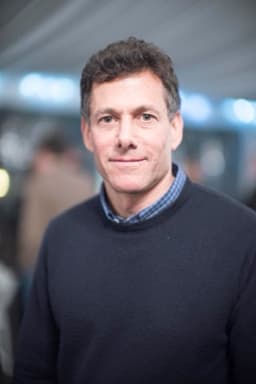
James Dyson Personality Type: INTJ
Founder and Chief Engineer, Dyson Ltd · The Strategic Architect
James Dyson, founder of Dyson Ltd, profiles as an INTJ with the highest resilience score in this index (98/100) and the highest creativity (98/100). The evidence is unusually literal rather than interpretive: he built approximately 5,127 prototypes of his vacuum cleaner across five years before the design worked, and has said so in his own words. He was trained in furniture and interior design at the Royal College of Art, not in engineering.
Who is James Dyson?
Sir James Dyson is the British inventor and industrial designer who founded Dyson Ltd, known for the bagless cyclonic vacuum cleaner he developed across roughly 5,127 prototypes before its 1983 launch.
He appeared on the David Senra podcast on December 7, 2025.
What makes James Dyson’s profile unusual?
Dyson provides the least interpretive evidence in this index. Most resilience scores rest on reading a founder’s behaviour under pressure. His rests on a counted number he states himself: 5,127 prototypes. That is roughly one failed attempt every eight hours for five years. He is also the clearest case here of a designer rather than an engineer building a deep-technology company, which sits behind both the highest creativity score and a lower people orientation.
James Dyson’s Big Five scores
| Openness | 95 | |
|---|---|---|
| Conscientiousness | 96 | |
| Extraversion | 48 | |
| Agreeableness | 30 | |
| Emotional Stability | 85 |
MBTI type INTJ is derived from these Big Five scores, not assigned separately. See the methodology.
James Dyson’s entrepreneurial traits
| Risk Tolerance | 90 | +8 vs median | |
|---|---|---|---|
| Visionary Thinking | 88 | 0 vs median | |
| Execution Focus | 85 | -3 vs median | |
| People Orientation | 45 | -20 vs median | |
| Technical Depth | 92 | +21 vs median | |
| Sales Ability | 72 | -13 vs median | |
| Resilience | 98 | +10 vs median | |
| Creativity | 98 | +14 vs median | |
| Analytical Rigor | 90 | +2 vs median | |
| Work Intensity | 92 | +3 vs median |
What is the evidence for these scores?
Every score above is an inference from the public record. The specific evidence behind each one is listed here so it can be checked.
Resilience
Highest resilience in the index, evidenced by a figure he states himself.
“I made about 5,127 prototypes of my vacuum before I got it right.”
James Dyson, quoted in Wikipedia, "James Dyson" · 2026-08-17Creativity
Creativity grounded in design rather than engineering training.
Studied at the Byam Shaw School of Art (1965-1966) and the Royal College of Art (1966-1970), working in furniture and interior design before moving into product design.
Wikipedia, "James Dyson" · 2026-08-17Agreeableness
Low agreeableness expressed as a willingness to litigate rather than concede.
In 1999 the High Court ruled that Hoover had deliberately copied his patented designs for its Triple Vortex bagless vacuum, and Dyson was awarded £4 million in damages.
Wikipedia, "James Dyson" · 2026-08-17Risk Tolerance
Risk tolerance sustained at personal scale, including on a bet that failed.
Announced an electric vehicle programme in September 2017 backed by £2 billion of his own investment, and cancelled it in October 2019 after concluding it was not commercially viable.
Wikipedia, "James Dyson" · 2026-08-17
Strengths
- Tolerance for iterative failure at a scale most founders never approach
- Design training applied to engineering problems, producing solutions engineers had not framed
- Defending intellectual property as a strategic asset rather than a legal afterthought
- Retaining private ownership, allowing decade-long development horizons
Structural risks
- The same conviction that sustained 5,127 prototypes also sustained a car programme cancelled after £2 billion
- Low agreeableness has made litigation a recurring feature of the company’s strategy
- Founder-as-chief-engineer concentrates product judgement in one person
- Deep vertical integration raises the cost of being wrong about a category
Questions about James Dyson’s personality
What is James Dyson’s personality type?
On the Founder Mode framework, James Dyson profiles as INTJ, derived from a Big Five estimate of openness 95, conscientiousness 96, extraversion 48, agreeableness 30, emotional stability 85. His resilience and creativity scores of 98 are both the highest in this index.
How many prototypes did James Dyson make?
Approximately 5,127, developed over five years before the G-Force cleaner launched in 1983. In his own words: "I made about 5,127 prototypes of my vacuum before I got it right." That is roughly one failed attempt every eight hours for five years.
Was James Dyson trained as an engineer?
No. He trained in art and design, at the Byam Shaw School of Art from 1965 and the Royal College of Art from 1966 to 1970, studying furniture and interior design before moving into product design. He is the clearest case in this index of a designer rather than an engineer building a deep-technology company.
Why did Dyson cancel its electric car?
Dyson announced the electric vehicle programme in September 2017 with £2 billion of his own investment and cancelled it in October 2019, concluding it was not commercially viable. It is the counterweight to his resilience score: the same conviction that sustained 5,127 vacuum prototypes also sustained a programme that did not work.
How do you compare to James Dyson?
The assessment scores you on the same 10 traits and the same Big Five scale used on this page, so your results are directly comparable.
Take the free assessment