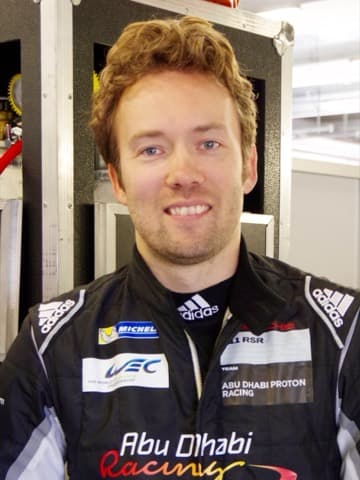
David Heinemeier Hansson Personality Type: ENTP
Co-owner and Chief Technology Officer, 37signals · The Innovation Catalyst
David Heinemeier Hansson (DHH), creator of Ruby on Rails and CTO of 37signals, profiles as an ENTP with exceptionally low agreeableness (20/100) and, unusually for a founder of his stature, low work intensity (40/100). He is the clearest example in this index of a founder who succeeded by refusing scale: 37signals has stayed deliberately small and profitable without venture capital for more than two decades, and he has argued publicly that the hypergrowth model is a trap rather than an aspiration.
Who is David Heinemeier Hansson?
David Heinemeier Hansson, known as DHH, is the Danish programmer who created the Ruby on Rails web framework in 2004 and is co-owner and CTO of 37signals, the company behind Basecamp and HEY.
He appeared on the David Senra podcast on July 26, 2026.
What makes David Heinemeier Hansson’s profile unusual?
DHH scores 40/100 on work intensity, the lowest in this index by a wide margin, and he holds that position deliberately rather than incidentally. He co-authored a book arguing that overwork is a failure of management, not a mark of ambition. Almost every other founder profiled here scores above 85. This is the single most counter-typical result in the dataset.
David Heinemeier Hansson’s Big Five scores
| Openness | 88 | |
|---|---|---|
| Conscientiousness | 80 | |
| Extraversion | 70 | |
| Agreeableness | 20 | |
| Emotional Stability | 78 |
MBTI type ENTP is derived from these Big Five scores, not assigned separately. See the methodology.
David Heinemeier Hansson’s entrepreneurial traits
| Risk Tolerance | 70 | -12 vs median | |
|---|---|---|---|
| Visionary Thinking | 85 | -3 vs median | |
| Execution Focus | 88 | 0 vs median | |
| People Orientation | 45 | -20 vs median | |
| Technical Depth | 96 | +25 vs median | |
| Sales Ability | 78 | -7 vs median | |
| Resilience | 88 | 0 vs median | |
| Creativity | 88 | +4 vs median | |
| Analytical Rigor | 82 | -6 vs median | |
| Work Intensity | 40 | -49 vs median |
What is the evidence for these scores?
Every score above is an inference from the public record. The specific evidence behind each one is listed here so it can be checked.
Risk Tolerance
Rejects the venture-scale model as a default path, favouring constraint over capital.
“they don’t need loads of capital to get going, so they can skip the investor rat race”
DHH, "Sitting down with Senra" (world.hey.com) · 2026-07-26People Orientation
Treats small team size as a competitive advantage rather than a stage to grow out of.
“Small teams can do incredible things when they embrace their constraints”
DHH, "Sitting down with Senra" (world.hey.com) · 2026-07-26Technical Depth
Exceptional technical depth: authored a framework that became foundational infrastructure.
Released Ruby on Rails as open source in 2004; received the Google/O’Reilly "Hacker of the Year" award in 2005 and a Jolt Award for Rails 1.0 in 2006.
Wikipedia, "David Heinemeier Hansson" · 2026-08-17Work Intensity
Low work intensity is an argued position, not an absence of ambition.
Co-authored "It Doesn’t Have to Be Crazy at Work" (2018) with Jason Fried, whose thesis is that chronic overwork reflects poor management rather than commitment.
Wikipedia, "David Heinemeier Hansson" · 2026-08-17Openness
High openness sustained across domains, not confined to software.
Competed at the 24 Hours of Le Mans from 2012, taking ALMS Rookie of the Year in 2012 and finishing 8th overall at Le Mans in 2013, alongside his software career.
Wikipedia, "David Heinemeier Hansson" · 2026-08-17
Strengths
- Building durable software abstractions that outlive their era: Ruby on Rails has been in continuous production use since 2004
- Writing as a distribution channel, turning strong positions into an audience without paid acquisition
- Structural independence, retaining ownership so that strategy is never set by an investor timetable
- Willingness to hold an unpopular technical position long enough for the industry to come around
Structural risks
- Very low agreeableness makes public conflict a recurring cost, including with communities that depend on his projects
- Deliberate smallness caps the ceiling: 37signals will not produce an outcome on the scale its software influence might justify
- Strong positions stated early leave little room to revise in public without it reading as capitulation
- The company and the personal brand are hard to separate, so his controversies become the product’s controversies
Questions about David Heinemeier Hansson’s personality
What is DHH’s personality type?
On the Founder Mode framework, David Heinemeier Hansson profiles as ENTP, derived from a Big Five estimate of openness 88, conscientiousness 80, extraversion 70, agreeableness 20, emotional stability 78. The defining feature is very low agreeableness combined with low work intensity, an unusual pairing among founders.
Why does DHH score so low on agreeableness?
Agreeableness measures preference for consensus over conviction, not likeability. DHH has repeatedly taken and held public positions against prevailing industry opinion, including on venture funding and company scale. A low score reflects that he optimises for being right by his own lights rather than for agreement.
Did DHH take venture capital for Basecamp?
No. 37signals has operated without venture funding, and DHH has argued that founders can "skip the investor rat race" because small software teams do not need large capital to begin. The company has remained privately held and profitable.
What did DHH say on the David Senra podcast?
DHH appeared on the David Senra podcast on 26 July 2026 and wrote about the conversation on his own blog the same day, emphasising that "Small teams can do incredible things when they embrace their constraints."
How do you compare to David Heinemeier Hansson?
The assessment scores you on the same 10 traits and the same Big Five scale used on this page, so your results are directly comparable.
Take the free assessment